How to Teach Kids About Smart Shopping Without Making It Boring
The supermarket is one of the best classrooms for financial literacy. Kids who learn to shop smart early carry those habits — and savings — for life.
Most of us learned to shop by watching our parents — which means we also inherited their habits, good and bad. Teaching children to shop well is one of the highest-return parenting investments you can make. The supermarket provides real, tangible, immediate feedback that no classroom exercise can match.
Here's how to make it engaging for kids at different ages.
Ages 4–7: The Counting Game
Young children can't grasp abstract financial concepts, but they understand concrete quantities. At this age, the goal is awareness, not strategy.
The shopping list task: Give your child the physical list (or your phone with the list). Their job is to find each item and tick it off. This builds attention to what you're buying, introduces the idea of planning, and gives them a job they take seriously.
The colour sort: Ask them to find the "green foods" (fresh produce — almost all GST-free) versus the "special treat foods" (packaged, processed). Frame it as a treasure hunt, not a lecture.
Count the apples: Have them count out the number of loose apples or potatoes you're buying. Weighing them at the scale is a bonus activity.
The lesson they absorb: shopping is purposeful, not random browsing.
Ages 8–12: The Price Detective
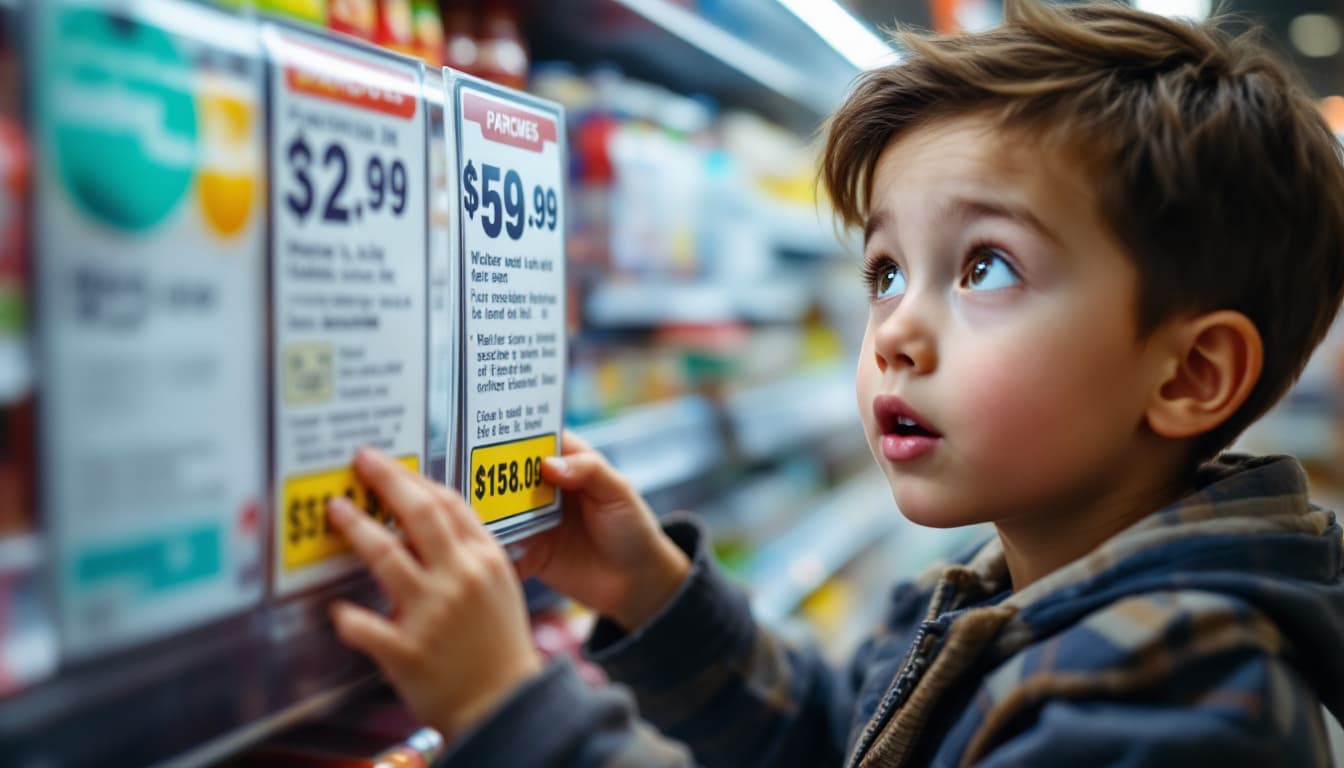
This age group can handle numbers and simple comparisons. Introduce unit pricing and basic decision-making.
The unit price challenge: When choosing between two similar products (e.g., two different brands of pasta), show them the shelf label and the price per 100g. Ask: "Which one is better value?" Let them figure it out. They will — and they'll remember it.
The $10 budget mission: Give them $10 and a short list of items to find within that budget. Brands and sizes are their choice. This creates immediate, real constraint and forces every decision to be deliberate.
The GST detective: Use the GSTFree app or website together before a shop. Show them which items attract GST and which don't. Ask them: "Why do you think chips have GST but apples don't?" The answer requires them to think about what "basic food" means — a genuinely interesting question.
Ages 13+: The Real Thing
Teenagers can handle genuine responsibility. Give them actual shopping tasks with a budget and accountability.
The solo shop: Give a teenager a list and a budget and send them to buy it. The first time might be over budget or missing items. Debrief together — not as a failure, but as a learning exercise. "What would you do differently next time?"
The meal plan challenge: Ask them to plan one family dinner per week, write the shopping list, and estimate the cost using the GSTFree tool. When they're in charge of planning and buying, they understand the real constraints.
Compare receipts: After a shop, sit with the receipt together. Point out the GST amounts, the items that were on special versus regular price, and the total. "How could we do better next week?" is a question worth asking regularly.

The Habits That Stick
Research on financial literacy consistently shows that habits formed in childhood persist into adulthood. The specific skills that transfer best:
- List-making before shopping (not shopping from memory)
- Comparing unit prices (not just headline prices)
- Understanding the difference between needs and wants in a shopping context
- Not impulse buying at the checkout (the sweet and magazine displays are deliberately placed there)
None of these require a finance lesson. They require practice in a real context — which the supermarket provides every single week.
The parent who involves their child in grocery shopping isn't just saving time. They're teaching one of the most practical financial skills their child will ever use.
Get more tips like this
Join thousands of Australians saving money at the supermarket every week.
Free. No spam. Unsubscribe anytime.